
Minimum staffing legislation arises again in Senate
 A bill to require minimum staffing levels as a mandatory subject of collective bargaining between a public employer and the representative of its employees was discussed in the Senate Labor Committee this week.
Senate Bill 319, by Sen. Veronica Klinefelt (D-Macomb), is a reintroduction of legislation from the previous legislative term, after MAC’s efforts stopped the bill from passing during the 2024 lame-duck session.
SB 319 amends the Public Employment Relations Act (PERA) and specifies that “other terms and conditions of employment” would include minimum staffing levels within the bargaining unit and consider minimum staffing levels a condition of employment with respect to a bargaining representative’s collective bargaining responsibilities. SB 319 would limit its application to only Public Act 312 employees, which was expanded to include corrections officers in 2024.
Making minimum staffing levels a mandatory topic of collective bargaining could increase staffing costs for counties. In addition to the potential for increased costs, many counties are facing staffing shortages. Implementing minimum staffing requirements when local governments are struggling to maintain fully staffed facilities will add to the difficulties counties already face when recruiting and retaining employees.
MAC opposes this legislation, as do the Michigan Municipal League and Michigan Townships Association.
For more information on this issue, contact Samantha Gibson at gibson@micounties.org.
Michigan continues positive streak on overdose deaths
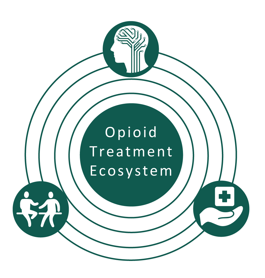 Michigan is on track to record its third consecutive year of declining opioid overdose deaths. Michigan’s local governments are playing a critical role in addressing the drug overdose crisis. According to provisional data from the Michigan Department of Health and Human Services (MDHHS), drug overdose deaths are projected to drop by 34 percent in 2024, about 1,000 fewer lives lost compared to 2023.
Opioid settlement funds, split between the state and local governments, are allowing for increased coordination and opportunities for local solutions to addressing the crisis. Local governments, in partnership with many community-based organizations, have expanded access to life-saving medications like naloxone, increased recovery support services, provided medication to treat opioid use disorder (MOUD) within jails and ramped up efforts in primary prevention efforts.
While this work continues to make an impact on communities across the state, there is still more work to be done. Not all populations in the state are seeing declines in overdose rates, some are seeing increases. Non-fatal overdoses also continue to remain high. In response to this growing concern, counties may have an emerging need to address disparities in drug overdose fatalities and non-fatal overdoses. MAC has created a process document to create an emerging needs fund to allow for more flexible and timely access to county settlement funds.
Early next month, MAC will release the data from the annual voluntary county opioid settlement survey highlighting planning efforts and information on how county governments across the state are utilizing their funds.
For more information on MAC’s opioid planning services, contact Amy Dolinky at dolinky@micounties.org.
Impact of federal policy debates on counties is focus of Podcast 83 episode
Podcast 83 takes on a Washington, D.C., flavor this week as the MAC team discussed the details of a briefing from the National Association of Counties (NACo) on June 5.
“(NACo Executive Director Matt Chase) and his team talked a lot about what’s happening with federal funding, and some of the concerns that we have around that, whether it’s Medicaid or the SNAP program,” reported Deena Bosworth. “They talked about this designation as sanctuary cities or sanctuary counties, and some of the confusion surrounding that … and then they really dove into some issues with FEMA and the different attempts by both the administration and Congress to make some changes to how FEMA operates, how money gets out the door and how eligibility is determined.
“There was a council put together to talk about what they want to do to make some changes to FEMA,” Bosworth continued. “And I’ve heard from a couple of emergency managers from across Michigan who are really concerned with what that implies. Are they going to get rid of FEMA? Is it going to be its own separate department? And I think at this point, they’re not sure.”
MAC’s Samantha Gibson detailed the latest news on Medicaid:
“President Trump ran on this changing Medicaid and cutting costs. The way they’ve chosen to go about it is interesting, though. Instead of increasing the income eligibility threshold, what they are exploring is more or less an administrative burden.
“It’s not going to change who’s eligible for Medicaid, but it’s going to make it more difficult to access it. … It remains to be seen what the increased paperwork requirements will look like with Medicaid.”
“Unfortunately, that means that the state and the locals are going to have to do more fact-checking, more reporting, more administrative paperwork,” noted Bosworth. “And that’s going to be pretty difficult for everybody to handle.”
“I think that’s what we’re seeing with the ‘Big Beautiful Bill’ too. It’s going to end up being cost shifts down to states,” said host Stephan Currie. And then how does the state make up those shortfalls, if there are shortfalls, and then what? How does that impact the state budget? Then, how does that impact locals? The whole trickledown effect, you have all these conversations going on at the same time, and they’re all impacted by different decisions at different levels.”
To view the complete episode, recorded on June 9, click here or on the image above.
Previous episodes can be seen at MAC’s YouTube Channel.
As student loan delinquencies mount, new MAC resource can aid counties and their employees
 On May 5, the Treasury Offset Program restarted, which can mean involuntary collections for student loan borrowers. The U.s. Department of Education shared that more than 5 million borrowers are in default, and 4 million borrowers are in late-stage delinquency. This means if borrowers don’t take action, almost 25 percent of the federal student loan portfolio will eventually be in default.
Student loan default has serious consequences, including employer wage garnishment, tax refund seizure, Social Security offset or damage to credit scores. Employer HR will start receiving letters from the government requiring them to garnish up to 15 percent of employees’ paychecks.
What this means for borrowers
- Over the next few weeks, the Department of Education will begin notifying borrowers impacted by collections. Borrowers in default will face penalties, including up to 15 percent of wages withheld from every paycheck.
What this means for HR employers
- Employers will start to receive a formal wage garnishment order from the government and must calculate, withhold, and remit funds — or face penalties.
Savi, a new program partner of MAC’s, can help county employers:
- Monitor and proactively assist at-risk employees to prevent wage garnishment
- Analyze federal wage garnishment letters and guide HR step-by-step on how to process them
Counties who are interested in joining Savi clients such as Oakland, Ogemaw and Saginaw counties, can reach out to Savi’s Tony Raffa at tony@bysavi.com or learn more by visiting Savi’s page on the MAC website.
Application period opens for infrastructure aid
 The Michigan Infrastructure Office (MIO) has announced the opening of its third 2025 application window through the Technical Assistance Center (TAC), giving local governments another opportunity to access federal infrastructure funding made available through the federal infrastructure law.
To see additional details, review this release from the Governor’s Office.
From June 16 through June 27, eligible local governments can apply for support from the TAC to pursue federal infrastructure grants.
TAC will host a webinar on Tuesday, June 17 from 10 a.m. to 11 a.m. Eastern, and offer virtual office hours on Monday, June 23 from 1 p.m. to 2 p.m.
Communities applying in this round may seek help targeting federal opportunities, including the FY25 Port Infrastructure Development Program, Wildlife Crossings Pilot Program, Transit-Oriented Development Pilot Program, and others. For more information, visit MIO Technical Assistance Center.
Wayne County’s Clark-Coleman passes at 88
 Irma Clark-Coleman, a longtime public servant in Wayne County and current county commissioner, passed away June 11. She was 88.
Clark-Coleman was serving her sixth term with the Wayne County Commission, representing District 5. She chaired the Committee on Public Safety, the Judiciary and Homeland Security board and the Community Corrections Advisory Board.
“I was incredibly saddened to hear about the passing of Wayne County Commissioner Irma Clark-Coleman,” said MAC Board President Melissa Daub, a colleague of Clark-Coleman’s on the Wayne board. “She was a dedicated public servant whose decades of leadership left a lasting impact on not only Wayne County, but the city of Detroit and the state of Michigan.
“Her unwavering commitment to justice, education, and community defined her career and inspired all who knew her,” she added. “Commissioner Clark-Coleman’s legacy of service throughout the last 50 plus years have truly been remarkable. I would like to extend my deepest condolences to her family and loved ones during this difficult time.”
Clark-Coleman was first elected to the Wayne board in 2009 after serving eight years in the Michigan Senate and two terms in the Michigan House of Representatives.
Clark-Coleman moved to Detroit as a child after being born in Georgia, attending Pershing High School and earning bachelor’s and master’s degrees from Wayne State University.
Bills to raise landfill fees get Senate committee hearing
 Legislation to raise hazardous waste and landfill tipping fees beginning in 2026 was reviewed this week in the Senate Energy and Environment Committee.
Senate Bills 246–247, by Sen. Darrin Camilleri (D-Trenton), would increase hazardous waste fees from $10 to $25 per ton and landfill tipping fees from 36 cents to $1.20 per ton. The resulting revenue would support environmental cleanup and redevelopment, back community grants and fund emergency preparedness resources for impacted areas.
Additional provisions include a $500,000 bond requirement for hazardous waste wells to help cover emergency response costs and a ban on the construction or expansion of Class I and IV injection wells. Industry groups have expressed concern over the potential impact on existing waste management infrastructure.
MAC is still assessing how the legislation could affect counties through new grant opportunities, emergency planning support and potential shifts in waste handling practices.
For more information on this issue, contact Jimmy Johnson at johnson@micounties.org.
Liabilities from hazardous substances would change under Senate bill package
 A legislative package that would significantly expand legal liability and access to the courts for individuals exposed to hazardous substances, even in the absence of a current injury or illness, was reviewed this week by the Senate Energy and Environment Committee.
Senate Bill 386, by Sen. Sue Shink (D-Washtenaw), would establish a new cause of action allowing individuals to seek court-ordered medical monitoring if they can prove significant exposure to hazardous substances and an increased risk of disease. If successful, the court would require the responsible party to fund a court-supervised medical monitoring program. The bill also allows for class action lawsuits and recovery of legal costs.
SB 387, by Sen. Mallory McMorrow (D-Oakland), would clarify that legal claims related to hazardous substances accrue when the plaintiff becomes aware — or reasonably should have become aware — of the harm or exposure. This change could extend the window for initiating litigation.
SB 393, by Sen. Sean McCann (D-Kalamazoo), would set a six-year limit on claims for natural resource damages or recovery costs tied to hazardous substances not regulated before July 1, 1994. The clock would begin when physical on-site cleanup begins.
While these bills do not directly impose new responsibilities on county governments, MAC is evaluating their potential downstream effects on county-operated facilities, landfills, emergency response services and court systems. Notably, SB 386 could lead to an increase in litigation, which may place added pressure on local courts and related resources.
For more information on this issue, contact Jimmy Johnson at johnson@micounties.org.
 Staff picks
- Feds pause operations at 3 Michigan Job Corps centers as part of nationwide move (Detroit Free Press)
- Midland County court awarded $100K to launch youth diversion program (Midland Daily News)
- How Detroit reclaimed a towering relic from the roaring ’20s (CityLab)
- BeachGuard is on duty this summer to protect Michiganders’ health and safety (Department of Environment, Great Lakes and Energy)