
Property taxes, housing complicate budget negotiations
 With a July 1 budget deadline looming, negotiations among House leaders, Senate leaders and Gov. Gretchen Whitmer continue but with little evidence of progress. Legislative leaders have yet to reach agreement on overall spending targets, and House Speaker Matt Hall (R-Kalamazoo) has suggested a temporary continuation budget may be necessary if negotiations extend beyond the July 1 deadline.
A major sticking point remains the House Republican proposal to reduce property taxes by more than $5 billion annually. State Budget Office officials advised legislators this week to move away from a plan that either creates a multi-billion-dollar hole in the School Aid Fund or requires a massive expansion of Michigan’s sales tax.
MAC continues to raise concerns about how the proposal would affect long-term local revenues. For example, the House plan doesn’t backfill revenue lost by eliminating the “pop-up tax”.
Another complication: MAC is hearing the governor wants housing legislation included as part of broader budget negotiations. Those proposals would significantly pre-empt local zoning authority to increase housing construction. Controversial policy changes affecting property taxes, local revenues or local zoning authority should be debated through the normal legislative process rather than being tied to budget negotiations.
As budget negotiations continue, MAC will be monitoring the budget process and any proposals that could affect the long-term stability of county revenues.
For more information on the budget, contact Deena Bosworth at bosworth@micounties.org.
Troubling juvenile justice bill could get House vote next week
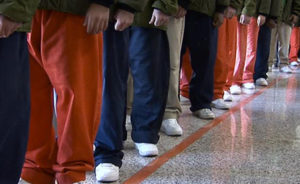 Legislation that would expand the Michigan Indigent Defense Commission (MIDC) Act to include indigent youth defense services in juvenile delinquency proceedings could get a House vote next week. MAC opposes the legislation due to the significant authority granted to the MIDC to establish new standards, approve compliance plans and determine allowable implementation costs.
House Bill 4070, by Rep. Sarah Lightner (R-Jackson), would make juvenile delinquency cases involving the potential for detention, secure placement or certain court-ordered dispositions subject to the same general framework currently used for adult indigent defense services. The bill also authorizes the MIDC to develop standards for youth defense services, require local compliance plans and extend the state’s grant funding structure to juvenile defense systems.
A new version of the bill now before the House would increase the income threshold used to establish a presumption of indigency from 140 percent to 200 percent of the federal poverty guidelines, potentially expanding the number of individuals eligible for appointed counsel. The substitute also added reporting requirements intended to provide greater transparency.
Most notably, although the bill maintains that costs above a county’s local share are to be funded by the state, it does not guarantee sufficient state appropriations for this deal.
MAC also is concerned about broader impacts on public safety. As the MIDC continues to establish compensation standards and increase funding for appointed defense counsel, county prosecutors are often expected to handle increased workloads without more funds. If the state intends to expand indigent defense requirements and compensation, it should also provide resources to help counties maintain proper staffing.
MAC will continue to advise legislators on improvements to this bill.
For more information on this issue, contact Deena Bosworth at bosworth@micounties.org.
Senate advances affordable housing tax credit program
 Legislation to create a new State Low-Income Housing Tax Credit program administered by the Michigan State Housing Development Authority (MSHDA) gained Senate approval this week.
Senate Bills 966-968, by Sen. Jeff Irwin (D-Washtenaw), were approved 23-13.
The legislation is designed to mirror the federal Low-Income Housing Tax Credit (LIHTC) program, which is widely used to finance affordable housing developments. Under the package, MSHDA would be authorized to award up to $250 million annually in state housing tax credits beginning in 2027, with the annual cap increasing based on inflation. The credits could be claimed against state income tax liabilities and certain insurance tax obligations.
Supporters say a state housing tax credit would help address Michigan’s housing shortage by encouraging additional investment in projects that may not otherwise be financially feasible.
While increasing housing supply remains a priority for many counties, the package raises important fiscal questions that policymakers will need to consider as the legislation moves forward.
According to the Senate Fiscal Agency, the bills could reduce state revenues by approximately $250 million annually if the maximum number of credits is awarded each year. Those revenue reductions would affect the state’s General Fund and would grow over time as the annual cap is adjusted for inflation.
For counties, the central question is how the state will absorb the long-term revenue loss while continuing to fund critical state and local priorities. At a time when lawmakers are also debating property tax reductions, infrastructure funding needs, and other major budget priorities, the impact of a new quarter-billion-dollar annual tax expenditure warrants careful consideration.
MAC has not taken a position on these bills.
For more information on this issue, contact Deena Bosworth at bosworth@micounties.org.
Senate passes brownfield redevelopment expansion
 A new Brownfield Redevelopment Grant and Loan Program within the Department of Environment, Great Lakes and Energy (EGLE) would be created under bills backed by the Senate in a bipartisan vote this week.
Senate Bills 898-899, by Sen. Sam Singh (D-Ingham), would create and repurpose existing brownfield funding streams. Eligible applicants would be local units of government.
Communities could apply for grants and loans to conduct environmental assessments, remediation activities and other response actions necessary to prepare contaminated properties for redevelopment. Assistance available for individual projects would be boosted, allowing grants and loans of up to $2 million per project, with additional flexibility for projects demonstrating significant economic or environmental benefits.
MAC supports the legislation because it provides counties and other local governments with additional tools to address contaminated and underutilized properties that often hinder economic development, housing construction and community revitalization efforts.
The legislation also builds on existing brownfield programs that have helped communities remediate contaminated sites and attract private investment.
The bills move to the House for consideration.
For more information on this issue, contact Deena Bosworth at bosworth@micounties.org.
Senate begins its look at dam safety requirements
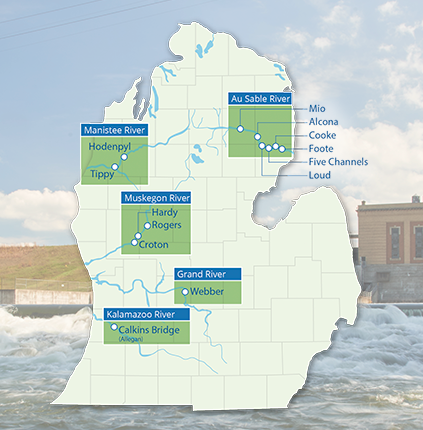
Map shows dams owned by Consumers Energy that the utility wishes to sell.
With a potential ownership change for more than a dozen dams looming, the Senate took testimony on legislation to inject more state scrutiny of this infrastructure.
Senate Bill 627, by Sen. Jon Bumstead (R-Muskegon), would require additional financial scrutiny when hydroelectric facilities are sold or transferred in Michigan. The bill comes as state regulators continue reviewing Consumers Energy’s proposed sale of 13 hydroelectric dams to Confluence Hydro.
Under current law, the Michigan Public Service Commission (MPSC) must approve the sale, acquisition, merger or transfer of regulated utility assets and evaluate whether a transaction is consistent with the public interest. SB 627 would add specific requirements for hydroelectric facilities by requiring the MPSC to determine whether a prospective owner has both the financial capacity and intent to safely operate, maintain, and ultimately decommission or remove a facility if necessary.
Specifically, the bill would require the MPSC to consider whether an acquiring entity can provide for:
- Capital investments necessary to maintain safe and efficient operation of the facility throughout its lifespan
- Damages resulting from a complete structural failure of the facility
- Future decommissioning or dam removal costs
- Other factors deemed necessary by the Commission
The legislation is being considered against the backdrop of the proposed transfer of 13 Consumers Energy hydroelectric dams to Confluence Hydro. …
Podcast 83: Lansing is full of budget talk, but clarity on content remains elusive
The state’s fiscal 2027 budget faces a July 1 deadline, but it’s not clear what that actually means for what will be in the document, say MAC’s Podcast 83 team members in a new episode.
“First and foremost, the budget, we’ve got an artificial deadline. I call it an artificial deadline. It is an actual statutory deadline of July 1, but there’s really nothing that puts any teeth in it if you (miss it),” said host Stephan Currie to open the episode, “as we saw last year when the budget got done on Oct. 8.
“What are we hearing on this year’s budget?”
“We are hearing making great progress. We are hearing that they are not talking at all. We are hearing, oh my goodness, we have lots of issues on the table and we’ll see what happens,” said Deena Bosworth. “We hear: ‘You know, we’re really going to get this done since it’s an election year, we’ll have the budget done by July 1.
“And then last week we heard, we could just do a few months of a budget and then come back and revisit it. So, yeah, we are hearing quite a bit,” she added.
“I will say this,” Bosworth said. “I think that they’re talking better now than they have been talking in years past. Don’t forget, for everyone out there, this is a discussion between the House, the Senate and the administration. Sometimes. conversations are great between two of those entities; sometimes, they are not great at all; and very rarely is it a good discussion between all three at the same time.”
To hear more about what all this talking could mean for county revenue sharing and other priorities, watch the full episode, recorded on June 15, by clicking here or on the image above.
Development briefings slated for UP next week
 County leaders in the Upper Peninsula are invited to attend one of two briefings next week on a U.S. Agriculture Department development program.
The Rural Opportunity Zone program, created by The Working Families Tax Cut Act of 2025, is designed to revitalize rural communities by incentivizing business development and investment. Small towns and rural America are great places to build new businesses but have too-often been overlooked.
To learn more about this work, you may attend:
- Tuesday, June 23, 10:30 a.m. to 11:30 a.m. Eastern, the Kaufman Block Building (also known as the Flagstar Building), 101 W. Washington St., Marquette.
- Thursday, June 25, 1:30 p.m. to 2:30 p.m. Eastern, Smartzone Building, 2345 Meridian St., Sault Ste. Marie.
For more information, contact USDA’s Jason Allen at Jason.Allen2@usda.gov.
 Staff picks
- The UP falling further and further behind?: A comparison of median household income growth (Rural Insights)
- Backed by threat of clawbacks, feds wield tight grip on $50B rural health fund (Kaiser Health News)
- Promising new treatment for pancreatic cancer doubles survival rates (PBS)
- ‘Most famous tree in the world’: Sherwood Forest’s 1,000-year-old Major oak dies (The Guardian)