
State experts: ‘Beautiful’ act cuts state revenue by $700M for coming year
 New federal tax and spending legislation creates a nearly $700 million hole in state resources for fiscal 2026, a new state legislative analysis reports.
The Michigan House Fiscal Agency released their analysis this week of the “One Big Beautiful Bill Act of 2025” (OBBBA), which makes major federal policy changes —particularly in tax policy, Medicaid and SNAP (food assistance) — that will significantly affect Michigan.
Taxes
OBBBA includes several federal business tax changes likely to reduce Michigan’s corporate income tax (CIT) revenue. Key provisions include:
- Immediate expensing of research and development costs, retroactive to 2022.
- Full expensing of qualified production property and increased Section 179 deductions.
- A new definition of business interest limitations, and a permanent 100 percent bonus depreciation (which will not affect CIT but could reduce individual income tax revenue).
All told, these changes are projected to reduce the state’s revenue by $677 million in fiscal 2026, with the size of the losses trending down in later years.
Medicaid
OBBBA enacts provider tax caps, state-directed payment limits and eligibility redeterminations every six months starting FY 2027. It also implements community engagement (work) requirements for the Healthy Michigan Plan. Michigan Medicaid costs are projected to decline by $7.1 billion gross by FY 2033-34, though some reductions may strain provider funding.
Food assistance
OBBBA shifts benefit cost-sharing to states based on error rates. Michigan could pay up to $602 million annually, with $401 million likely based on its current error rate. Other changes include stricter work requirements, limits on “Heat and Eat” eligibility and increased state share of administrative costs to 75 percent (up from 50%).
Overall, OBBBA imposes substantial fiscal and administrative burdens on Michigan, while reducing federal support across major social programs.
For more information on MAC’s advocacy, contact Deena Bosworth at bosworth@micounties.org.
EGLE issues update on Materials Management Program
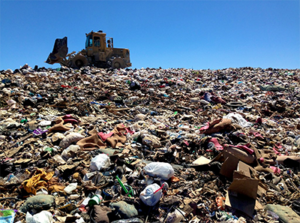 The Michigan Department of Environment, Great Lakes and Energy (EGLE) has provided additional guidance on the next phase of the Materials Management Planning (MMP) Grant Program, aimed at supporting counties as they continue to develop and implement their required MMPs under Part 115.
Under Section 11587, counties making progress on their current MMP grant agreements will remain eligible for additional funding, subject to future legislative appropriations. Rather than issuing new grants, EGLE will amend existing grant agreements to reflect updated scopes of work, deliverables, budgets, and timelines. The timeline for these amendments is still being finalized.
To help counties manage costs, advance payment requests may be submitted to the State’s Office of Financial Management. While not guaranteed, EGLE encourages counties needing support to begin that process early. In addition, counties can request amendments to their contracts — including changes to budgets and deliverables — pending EGLE approval.
Grant amounts are based on a formula that includes a base amount ($60,000–$70,000) plus a per capita allocation, with a cap of $300,000. Counties such as Kent, Oakland, Macomb and Wayne are eligible for the maximum award of $360,000.
A full list of allowable MMP grant amounts by county can be seen here. Counties are encouraged to begin identifying their priorities and reach out to EGLE planning staff with any questions.
If you have any questions or want to learn more, contact Jimmy Johnson at johnson@micounties.org.
MAC releases opioid settlement survey results
 MAC is excited to announce the release of Opioid Settlement Funds Planning and Spending in Michigan Counties: Annual Survey Reporting, an analysis of the data from the annual voluntary reporting survey.
The survey data captured funding and funding structure, stakeholder engagement, fund impact and investment, accountability and outcomes, support resources and technical assistance as well as successes and challenges. The report compares data collected from calendar years 2023 and 2024. Forty-three percent (43%) of counties responded to the 2025 annual survey and the data collected illustrates themes and trends from across the state. MAC’s Opioid Settlement Dashboard will be updated with the new survey data next month.
For questions or technical assistance, contact Amy Dolinky at dolinky@micounties.org.
NACo tool helps counties track federal funding disruptions
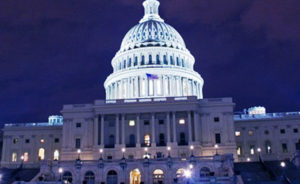
After President Trump mandated via several executive orders that all federal agencies review the funding opportunities they provide, recipients have encountered disruptions in program funding, affecting the delivery of various services.
These interruptions have created challenges for counties working to maintain essential services for our communities. The National Association of Counties (NACo) has provided an analysis outlining the recent funding disruptions and their impact on key programs that support county operations.
This tracker will be updated periodically and was last revised on June 4, 2025.
For more information on NACo’s federal advocacy, click here.
 Staff picks
- Michigan ranks 40th in 2025 National Road System Condition Assessment — unchanged from 2024 (Citizens Research Council of Michigan)
- Kalamazoo County erases $2.5M in medical debt for 7,000 residents (MLive)
- State lawmakers look for new solutions to meet growing energy demand (Pew Trusts)
- Do you have unclaimed property with the state of Michigan? (Department of Treasury)