
Let legislators know that revenue sharing cuts are unacceptable
 MAC continues to urge county leaders to speak out against a fiscal year 2026 budget plan adopted by the Michigan House that would cut county revenue sharing by $34.9 million. This action wipes out the long-overdue progress counties made in FY25 to restore revenue sharing to sustainable levels.
Please contact your HOUSE and SENATE members by phone or email to share your budgetary realities with them using the talking points below.
(If you are not certain which House or Senate district(s) overlaps your commissioner district, please use our new mapping tool found here. As you zoom in to your community, you will see district lines for the state House, state Senate and your county’s board districts.)
FY26 Budget Talking Points
Unlike cities, villages and townships (CVTs), counties do not have constitutionally guaranteed revenue sharing. Instead, we rely solely on statutory revenue sharing — making us far more vulnerable to state budget decisions.
Meanwhile:
- CVT constitutional revenue sharing is increasing, reaching a total of $1.1 billion.
- When combined with their statutory revenue sharing, CVTs will receive over $1.4 billion.
- Counties, by comparison, are left with just over $256 million in statutory revenue sharing — if the proposed $34.9 million cut remains.
The House plan also strains county resources even through the process of issuing new dollars. For example, there is $40 million for county sheriffs — but with strings attached. Any county that raised sheriff budgets in FY25 using revenue sharing must keep that higher funding level, even as overall revenue sharing is cut. This locks counties into higher law enforcement costs while reducing flexible general fund dollars.
Counties need predictable, ongoing funding to deliver core local services — not a piecemeal approach that creates new obligations while undermining our ability to balance budgets.
Please contact your legislators today and urge them to:
- Restore the $34.9 million in county revenue sharing that the House cuts.
- Recognize that counties cannot meet state-imposed obligations without stable, flexible funding.
- Address the inequity between constitutionally protected CVT revenue sharing and vulnerable county statutory revenue sharing.
Your voices matter. Legislators must hear from county commissioners directly about the real impacts these cuts will have on local services and budgets.
For more information on MAC’s advocacy, visit the MAC website.
14 file for MAC Board elections at 2025 Annual Conference
Fourteen county commissioners from across Michigan will vie for seven seats on the MAC Board of Directors in elections to be held at the 2025 Annual Conference, Sept. 30-Oct. 2.
With the filing deadline closing on Aug. 30, 2025, these are the official candidates for the seats:
Official Candidates for 2025 MAC Board Elections |
|
| Region 1, Seat B | Region 6, Seat A |
|
Kelli van Ginhoven, Delta |
Kathy Niemiec, Bay |
| Region 3, Seat B | Region 6, Seat B |
|
Julie Wuerfel, Berrien |
Jay O’Farrell, Iosco* |
| Region 4, Seat A | At-large, Seat B |
|
Brian Hurtekant, Clinton |
William Miller, Oakland* |
| Region 5, Seat A | |
| Antoinette Wallace, Macomb* | *Incumbent director |
Six of the available seats represent regions, so they will be decided by a caucus in that specific region. The at-large seat is determined by votes from all six MAC regions. Candidates running unopposed still must receive an official vote of support at the conference.
Only filed candidates may be considered by the regional caucuses. And only commissioners who are registered and attending the conference may participate in the election.
Check out MAC’s website next week for candidate statements and more information on the election.
House budget would squeeze rural hospitals, care workers, say health leaders
 Hospital and health care groups are warning that a Michigan House budget plan, combined with earlier federal action, could wreak havoc with care in Michigan, especially in rural areas.
The House’s omnibus fiscal 2026 budget, House Bill 4706, places about $2.5 billion in hospital provider‑tax dollars behind extra “contingency” steps, trims funding tied to Medicaid physician support (SNAF) and cuts $10 million for maternal care verification — changes that hit small, low‑margin hospitals hardest.
For the workforce, the House version also drops a planned Medicaid fee‑for‑service increase for direct‑care workers. Michigan’s existing premium — $3.40/hour — runs only through Sept. 30, 2025, so without a new deal, nursing homes and home‑ and community‑based providers will be trying to keep staff without fresh state help in FY26.
Federal legislation enacted this summer tightens Medicaid rules and adds work‑requirement provisions beginning in 2027. Nonpartisan analysts project coverage losses from these changes, which typically mean fewer paying patients and more uncompensated care — pressures that rural facilities feel first.
This week, nurses in Northern Michigan warned that staffing cuts will harm patient care — exactly the kind of ripple rural communities experience when reimbursements tighten and wage supports stall at the same time.
Unless the final budget restores hospital funding lines and extends or strengthens direct‑care pay, rural hospitals should expect harder choices on services and staffing and care-givers will face tougher retention conditions. County leaders can help by sharing local impacts with their elected legislators so they can know and understand the potential impact.
For more information on this issue, contact Jimmy Johnson at Johnson@micounties.org.
Urge Congress to support the FEMA Act for stronger disaster response
 On Sept. 3, the U.S. House Transportation and Infrastructure Committee overwhelmingly approved the Fixing Emergency Management for Americans (FEMA) Act (H.R. 4669). This critical piece of legislation contains a number of wins for counties that were directly advocated for by NACo’s Intergovernmental Disaster Reform Task Force.
As the bill now heads to the full U.S. House for a vote, we need your help to turn these hard-fought wins into law. Contact your House member and urge them to support the FEMA Act. Your voice as a county leader is essential to securing a more effective and responsive emergency management system for all communities.
Key wins in the bill include:
- Transitioning FEMA’s Public Assistance Program from a reimbursement to a grant model, with the opportunity for grants to be made directly to counties
- Streamlining environmental and historic preservation reviews
- Creating a universal disaster application for disaster survivors
- Restructuring FEMA’s pre-disaster mitigation program by moving it to a formula-based grant
- Creating a Public Assistance dashboard with information for each major disaster declaration
Please reach out to your representatives today using this template letter asking them to support the bill.
MAC encourages county leaders to ‘Walk a Mile’ on Sept. 17
 The Michigan Association of Counties is part of a coalition working to protect local control of community mental health services.
On Sept. 17, another member of the coalition, the Community Mental Health Association (CMHA) will hold its annual Walk a Mile in My Shoes Rally (the largest annual rally held at the Michigan Capitol, with crowds topping 2,000 people). While this event traditionally highlights the importance of accessible mental and behavioral health care for all Michiganders, this year, it also will underscore the strong opposition, by a broad coalition, to the planned bid-out to manage the state’s public mental health system.
Former U.S. Sen. Debbie Stabenow is this year’s keynote speaker at the Walk a Mile Rally. The rally begins at 12:30 p.m., with Sen. Stabenow’s remarks set for 1:30 p.m.
A large turnout will send a strong message to state leaders about the opposition to the state’s bid-out plans, so county leaders are encouraged to attend and make their voices heard in Lansing.
Workshop will review Michigan’s energy grid
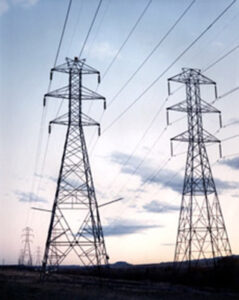 “Understanding Michigan’s Energy Grid” is a free morning workshop featuring energy experts who will provide a high-level overview of Michigan’s grid — from transmission to generation and supply — and what it means for local communities.
The event will be held in the Burma Center (765 Upton Ave., Springfield, MI 49037) from 9 a.m. to 11 a.m. on Sept. 17.
Topics will include:
- ITC – Transmission Systems & Regional Connections
- Consumers Energy – Power Generation & Distribution
- Regulatory Perspective – Local Impacts & Community Considerations
Each presentation will provide practical insights, real-world examples, and time for Q&A.
Sign up by clicking here or the hyperlink above.
Governor sets special election to fill vacant Senate seat
 Voters in Michigan’s 35th Senate District will vote Feb. 3, 2026, in primaries to begin to fill a seat vacant since the previous senator won a seat in Congress at the end of 2024. The announcement, made last week by Gov. Gretchen Whitmer’s office, set the general election for May 5, 2026.
The 35th District covers parts of Bay, Midland and Saginaw counties and has been unrepresented in Lansing since Kristin McDonald Rivet, a Democrat, moved to the U.S. House of Representatives at the start of 2025.
Prospective candidates must file by September 30, 2025. The elected candidate will serve the remainder of the current term, ending December 2026.
This marks the longest period a Michigan governor has taken to call a special election since the state adopted a full-time Legislature in 1965. The timing has prompted discussion among lawmakers and political observers about the impact of prolonged vacancies on representation and legislative dynamics, particularly given the Senate’s current 19-18 party split in favor of the Democrats.
For more information on this issue, contact Jimmy Johnson at Johnson@micounties.org.
 Staff picks
- In Baldwin, ICE detention center spurs anger — and hope — in immigration war (Bridge Michigan)
- Texas’ road-building plans keep growing (Governing)
- He built Michigan’s Medicaid work requirement system. Now he’s warning other states. (Kaiser Health News)
- Michigan’s first state prison to become Jackson farmers’ market (MLive)